AI-First NHS Training Platform
IT and systems training for the NHS
Increase EPR and clinical system adoption, certify staff before go-live, and close knowledge gaps — with practice-based training built for real NHS workflows, major rollouts, and BAU system changes.
 75%+
75%+reduction in training time
 150K
150KNHS staff trained across 30+ systems
 87%
87%of users certified before system go-live
 9,000
9,000hours of direct training time saved in a single rollout
Trusted by NHS Trusts across the UK


Real results from NHS Trusts


 90%+
90%+knowledge gap closed
Liverpool University Hospitals certified 87% of 5,266 users before system go-live — improving staff knowledge from a 31% baseline to 93% on best attempt, and closing over 90% of the knowledge gap through repetition alone.

 75%+
75%+reduction in training time
NHS Northwest cut training time by more than 75% — from 6 hours of classroom training to 2 hours with Attensi — while achieving full staff certification before system go-live with no replacement cover required.


 9,000+
training hours saved
An NHS Trust saved over 9,000 hours in direct training time across a single system rollout — with 75% of staff completing training two weeks before go-live, reducing pressure on floorwalkers and post-launch IT support.
The Challenge
New systems only deliver value when staff can use them
NHS Trusts invest heavily in EPRs, clinical systems, and digital transformation programmes — but value is only realised when staff confidently adopt them. Rotating rosters, mixed staff groups, and the relentless pressure of clinical environments make consistent system readiness hard to maintain. When training doesn't build genuine confidence before go-live, the cost shows up in floorwalkers stretched thin, IT support queues, and a workforce learning on the job in live care.
- Staff sit through training once and arrive at go-live uncertain.
- Knowledge fades fast without repetition or hands-on practice.
- Hard to know who is actually ready before a system launches.
- Most training proves staff attended — not that they're prepared.
The Solution
Training tailored to the NHS

NHS Trusts invest heavily in EPRs, clinical systems, and digital transformation programmes — but value is only realised when staff confidently adopt them. With simulation training designed around the reality of the NHS — your systems, roles, and local processes — staff build confidence in the tasks they will perform on wards, in clinics, out in the community, and across operational teams. Staff practise realistic scenarios, from step-by-step system simulations to EPR navigation and data entry, repeatedly until the actions are instinctive.
Staff arrive confident, competent, and certified before go-live — with the data to prove it.
Driving excellence across:
- EPR and clinical system navigation
- Documentation, data entry, and workflow compliance
- Patient flow, discharge, and operational processes
- Role-based readiness for every staff group
How it works
Three steps to a system-ready workforce.
Design training around your workflows
Whether you build content yourself, use Attensi's proprietary AI, or our consultancy and design team — scenarios are designed around your clinical systems, EPR workflows, and local SOPs. Always consistent, always current; update and deploy instantly when a system changes, a new module launches, or local processes shift.
Workflow skills become instinct
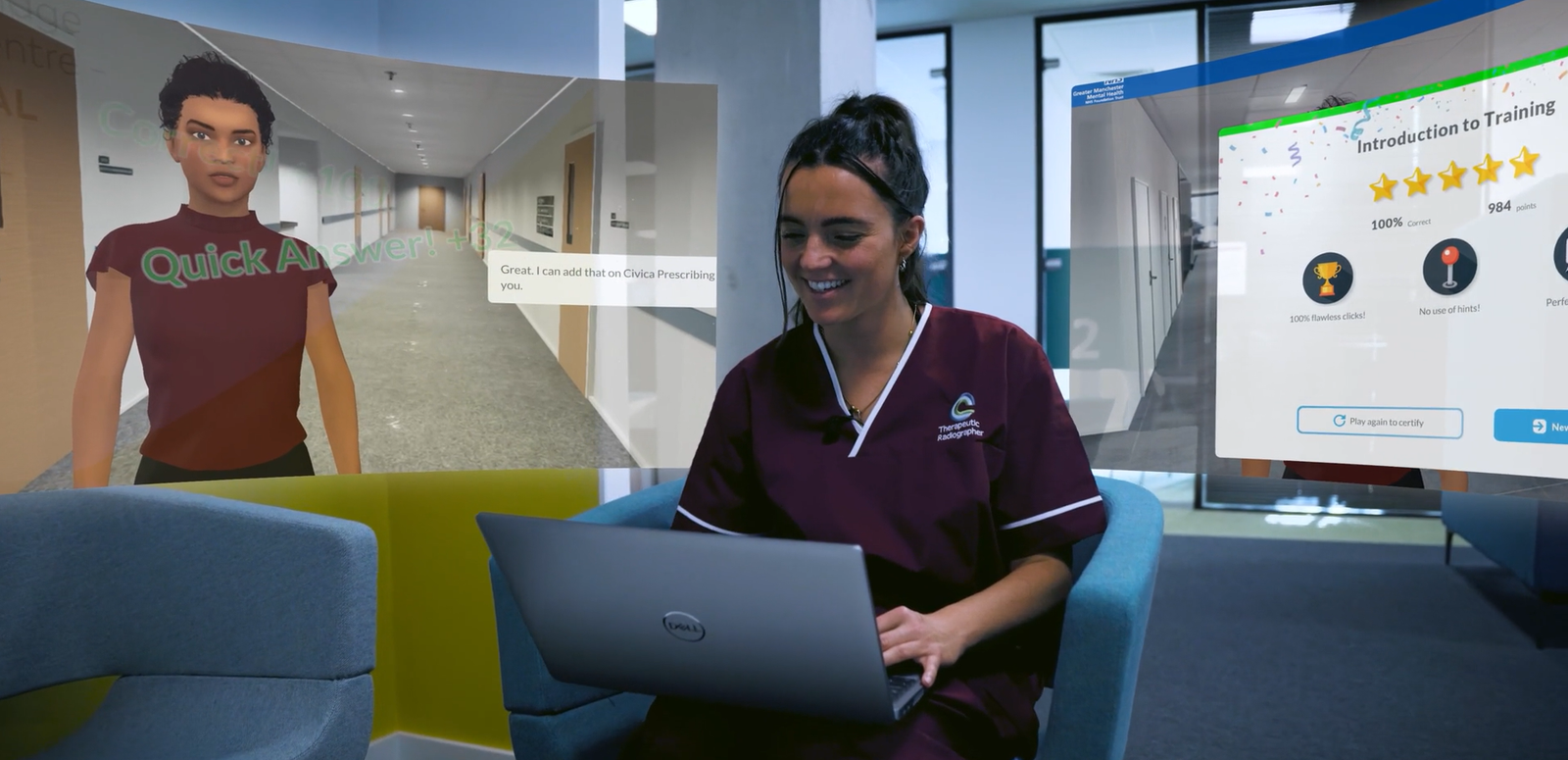
Training modules in the form of a game drive motivation — fuelling voluntary repetition that builds competence. Staff practise realistic system scenarios, get instant feedback, and build IT and system mastery. Accessible on any device, around shifts, handovers, and ward pressures — staff stay confident and system-ready across every team and Trust.
Connect training to system adoption
Data that reveals where knowledge is strong and where confidence is slipping — across role, ward, department, and Trust. Use the data to support ongoing EPR optimisation and connect training directly to go-live readiness, hypercare, and post-launch system performance.
NHS Northwest
Three years of IT-system training
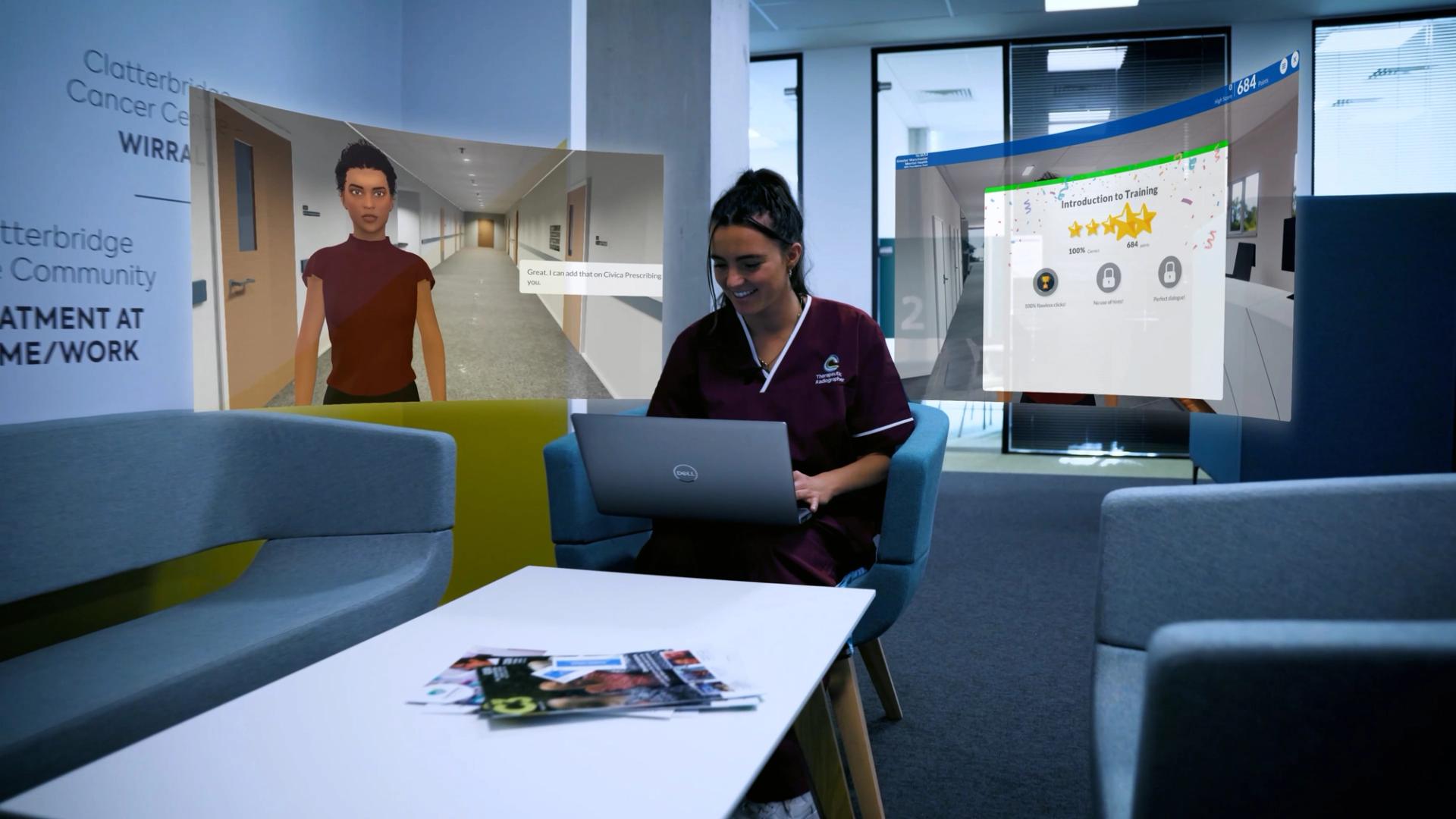
NHS Northwest reports three years of successful training with Attensi game-based simulations — cutting training time from 6 hours to 2, with 95% of staff engaging with the training and a 92% boost in IT system confidence.
Platform features
Purpose-built for performance.
The tools NHS organizations need to increase system adoption, reduce knowledge gaps, and prove readiness before go-live.

Game-based simulations
Realistic simulations shaped around your NHS systems, clinical workflows, and local processes — letting staff practise EPR navigation, documentation, patient flow, discharge, ordering, and reporting repeatedly until practice becomes system confidence.

AI-supported scenario practice
Support realistic practice for change conversations, patient-facing queries, and staff confidence — with scenarios shaped around the situations NHS teams actually face.

Mobile-first delivery
Available on iOS and Android, staff complete training in short, flexible sessions on any device — around shifts, clinics, handovers, and ward pressures — no scheduling, no cover required, and no pulling people off the ward.

Role-based training across every staff group
Build tailored learning pathways for nurses, doctors, AHPs, admin teams, operational staff, superusers, students, locums, bank and agency workers — so each user practises the workflows they actually need in their role.

Real-time performance data
Reveal competence gaps and readiness levels by role, ward, department, and Trust — in real time. Give programme, clinical, and learning teams the visibility they need before go-live and throughout BAU.

Connects with your existing tech stack.
Connects with ESR, Trust LMS platforms, SSO, SCIM, learning records, and reporting processes — so simulation training works alongside your established infrastructure without adding admin burden.
Customer Success
Your success is our success

From mobilisation through go-live and into BAU, you have a dedicated Customer Success Manager who works alongside a skilled team — design specialists, training consultants, and experts in behavioural science — all committed to the success of your rollout and with experience supporting NHS digital transformation programmes.
How Attensi differs from traditional training
All your training needs. Covered.
Explore training built for your reality — and designed to drive performance where it matters most.




“We chose Attensi because we wanted to give our staff a practical, engaging way to build confidence using Nervecentre. Being able to practise realistic tasks in a safe environment is central to our approach, helping colleagues connect their training with the work they do every day. We’re excited to support staff as they develop their skills and to fit learning around busy clinical schedules. Ultimately, our aim is to help colleagues use Nervecentre confidently and effectively, supporting the delivery of patient care.”
“As a learning designer, I want to create training that feels relevant and gives people an active role in their learning. I’ve found Attensi’s content creation tools straightforward to use, making it easy to turn Nervecentre workflows into interactive scenarios that reflect our colleagues’ everyday tasks. Working alongside the Attensi team has helped us bring together our knowledge of the Trust with their expertise in simulation training. I’m excited about how we can continue to build and adapt the content ourselves as our needs evolve, giving staff meaningful opportunities to practise and build confidence.”
Frequently asked questions
Common questions from NHS Trusts
Can't find what you're looking for? Talk to our team.
Game-based simulation training is one of the most effective ways to increase system adoption in NHS environments. Liverpool University Hospitals certified 87% of more than 5,000 users before go-live — reducing training time by 75% compared to classroom sessions and closing 90% of the knowledge gap through repetition. When staff can practise real workflows on their own device, without needing cover or scheduled sessions, adoption rates rise significantly. For Trusts delivering frontline digitisation or optimizing existing EPR workflows, adoption improves further when staff can practise the tasks they will actually perform in their own role — not just complete generic system training.
EPR training prepares NHS staff to use Electronic Patient Record systems for the workflows that support patient care — including documentation, orders, results, referrals, scheduling, reporting, and care coordination, depending on local configuration. Classroom training typically covers how a system works in theory, but staff rarely retain enough to use it confidently on day one. Simulation-based training puts staff inside realistic EPR workflows and makes them repeat the steps until the actions are instinctive. Liverpool University Hospitals saw staff improve from 31% baseline knowledge on their first attempt to 93% on best attempt — closing 90% of the knowledge gap through repetition alone, in a fraction of the classroom training time.
The most effective approach is simulation-based training built around your specific system — not generic e-learning. Attensi replicates the exact screens, workflows, and data entry steps your staff will face, so they can practise repeatedly before the system goes live. In one NHS deployment, 75% of training was completed two weeks before go-live, with 87% of users certified and ready before launch day. This gives programme teams a clearer view of operational readiness before go-live and reduces pressure on floorwalkers, superusers, and hypercare support after launch.
Attensi can be configured around a wide range of NHS clinical, operational, and administrative systems, including platforms such as Cerner, Epic, SystmOne, EMIS, and Nervecentre. Training is built around your actual system screens, workflows, and processes, so staff practise the exact steps they will follow in real clinical use. Content can be updated instantly when systems change or new modules are introduced.
Attensi helps Trusts sustain adoption after launch by supporting refresher training, new starter onboarding, workflow updates, new modules, superuser certification, and targeted interventions where confidence or competence gaps appear. Many Trusts are now focused on optimising systems already live — Attensi supports both major implementation programmes and the ongoing BAU training demands that follow.
Yes. Attensi creates role-based pathways for nurses, doctors, AHPs, admin teams, operational staff, students, locums, bank and agency workers — so each group practises the workflows that matter to their role. NHS workforces are not homogenous, and generic training often fails to reflect what different users actually do in the system. Role-based pathways make training more relevant, more efficient, and more likely to translate into confident system use.
Attensi integrates with existing NHS learning infrastructure, including ESR and Trust LMS platforms, via SSO and SCIM. Training completions, certification records, learning records, and compliance reporting connect into existing processes — helping Trusts avoid creating another disconnected learning platform. Attensi enhances the existing stack, adding simulation and practice-based training where traditional LMS content cannot reach.
Yes. Staff can complete training in short, flexible sessions around shift demands, handovers, clinics, and ward pressures — without a classroom or scheduled session. More than 5,000 NHS employees completed system training around their working patterns, with no replacement staff required. In a clinical environment where releasing people from the floor is rarely straightforward, that flexibility is critical.

See it in action
Book a demo designed around your Trust's workflows
Tell us about your organization, systems, and workforce priorities. We'll show how Attensi can support system and workflow adoption, role-based readiness, reduced training time, and sustained confidence before, during, and after go-live.