Skip to content
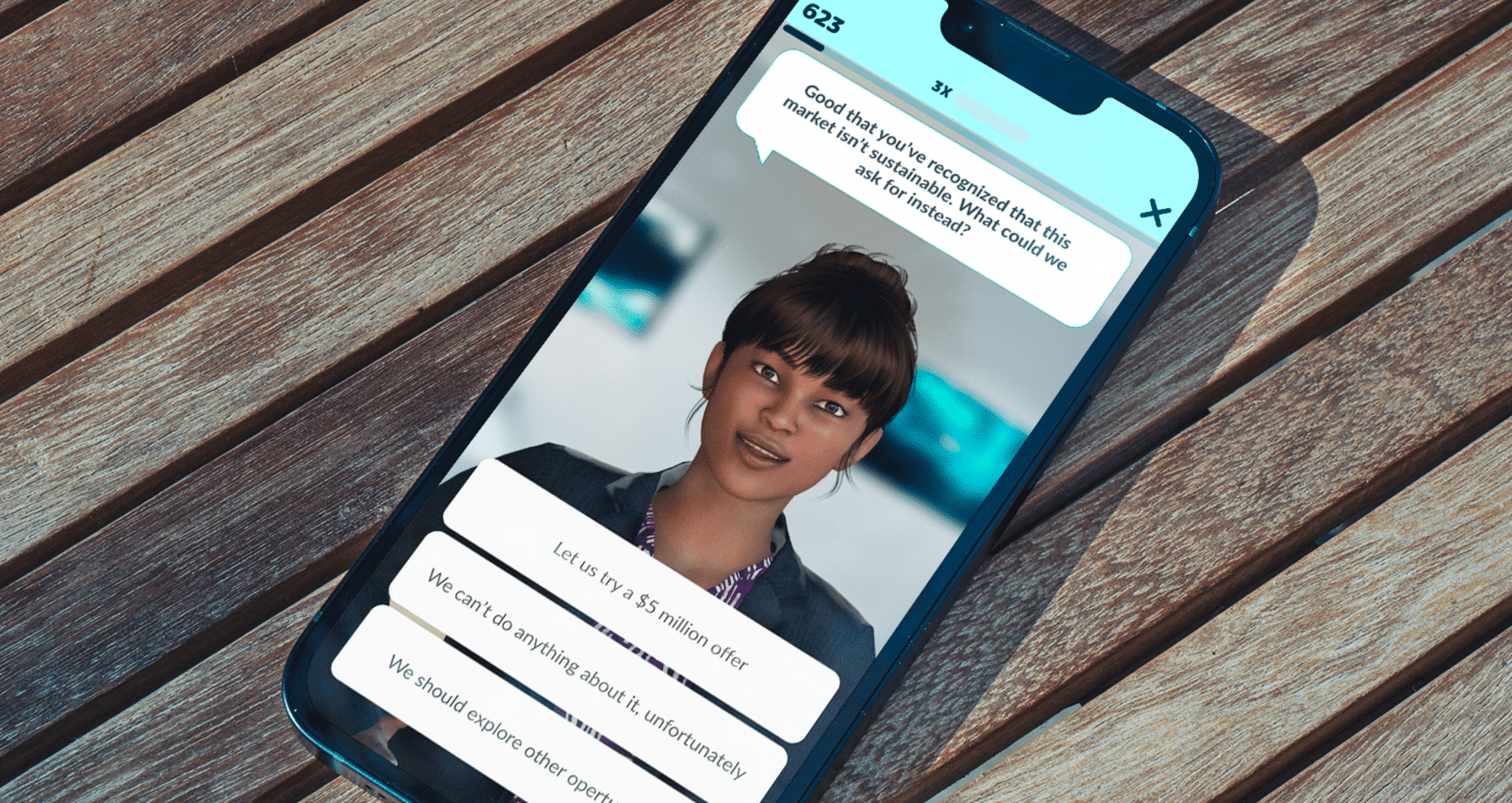
Illustration of mobile training

Insights

Mobile learning: Knowledge on the go

Mobile learning, also known as mLearning, lets employees train on the go – on a phone, tablet, laptop or other device.

Most people are rarely far from their phones, so this style of training works for Gen Z, millennials and baby boomers alike.

Attensi Team

Published · Updated

Here are some key stats on mobile phone usage:

  • More than 85% of the world’s population owns a smartphone.¹
  • Almost three-quarters of all internet users were expected to go online through their smartphone by 2025.¹
  • Globally, the number of smartphone users grew by almost 50% between 2017 and 2022.¹

You need to be where your people are, and they’re on their mobile devices. This means you can make your learning and development more accessible and more effective than ever.

This is learning on the move

There’s a wide range of mobile learning formats out there, including:

  • Podcasts
  • Games
  • Quizzes
  • Videos

If you can do it on a mobile device away from the workplace, it’s mobile learning. Often paired with microlearning, mLearning is usually short, snappy and packs a punch.

Map view of an Attensi training program

Why you can’t afford to ignore mLearning

When one of the most common reasons for leaving a job is a perceived lack of progression or development, you can’t afford to ignore the increasing popularity of mLearning.

Gone are the days of being confined to a conference room wading through lengthy documents. Whether it’s on planes or trains, your people are ready and waiting for this kind of engaging and impactful learning and development, and they’re ready to do it anywhere.

Your organization has a real opportunity to develop its employees to be confident and capable through the use of mobile-based learning.

Think about how you can use mLearning as part of your wider employee enablement plans.

What’s so great about mobile learning?

Active learning vs. passive learning

  • Active learning

    • Will encourage more critical thinking and discussions
    • More interactive – requires decision making and actions from participants
    • Teachers and guides are there to facilitate rather than lecture
    • More ownership and responsibility are placed on the participant to learn
  • Passive learning

    • Information will generally be passed on without much involvement by participants
    • Knowledge retention is comparatively lower
    • Participants will usually learn through observation
    • Teacher or trainer takes more of the responsibility for training

Empowered learners

When you diversify your learning and development programs, you give your people the chance to learn in the way that suits them best. Empowering them with the right tools drives employee engagement and motivation.

Engaged, empowered employees are three times as likely to stay in their roles for longer², so it pays to get this right.

Improved completion rates

Modern mobile learning platforms will often have measurement, analytics and feedback capabilities built in. This means you can have direct contact with your teams and monitor ongoing completion rates.

When you take the time to create mobile-first training with improved accessibility, the likelihood of completion increases. There’s evidence to suggest that mobile learners complete their modules almost 50% faster than their desktop counterparts.³

Cost effective

Mobile learning can require a larger investment upfront, but if your organization is constantly refreshing and adding new content, it often ends up being more cost effective in the long term.

You remove the cost of a training facility, an instructor and travel to and from venues. You also cut printing costs for information that often goes out of date quickly.

One of the most expensive components of any business is people’s time. Mobile learning gives your people more time to apply what they’ve learned in their day-to-day work. For example:

  • The NHS cut total training time from 46 weeks to just 2, saving 40,000+ frontline staff hours.
  • Training completed in just 3 hours with Attensi, compared with 60 hours in the classroom.

What does mLearning look like in the workplace?

Here are the things to think about when implementing mLearning into your organization:

Mobile-first, not just mobile-ready

Mobile technology has come a long way, and your employees now expect training that works as smoothly as the apps they use every day.

Think mobile-first, not just mobile-ready. Your teams will thank you for it. There’s nothing worse than trying to play a game that won’t display properly on a phone. Something can be mobile compatible in that it loads and displays, but there’s a big difference between that and training designed specifically for mobile.

Flexible training schedules

‘Flexible’ working is about much more than just working from home. True flexibility means allowing your teams to make decisions about what works best for them – from fully remote to hybrid working.

Mobile learning gives your teams the flexibility to decide when and where they learn and how regularly they participate.

How to make mobile learning hit the spot

Make it quick

As mentioned, microlearning is the perfect partner for mobile learning. Whether your employees are learning on the commute or during a quick coffee break, keep your mobile learning bite-sized.

Challenge yourself to keep your modules to five minutes or less.

Make it fun

A little healthy competition goes a long way.

When you combine quick, punchy modules with gamification, you’re on to a winning combination that will have your teams coming back for more.

For distributed and frontline teams, mobile learning may be the missing link in employee enablement. Give your people the tools they need to be truly exceptional.

If you’d like to give your teams everything they need to succeed, talk to the Attensi team today.

Are you ready to level up your training?

You might also be interested in

Sources

  1. How many smartphones are in the world?, bankmycell.com
  2. Why You Hate Work, nytimes.com/2014/06/01/opinion/sunday/why-you-hate-work.html
  3. Benefits of Mobile Learning, cdn.lynda.com/cms/asset/text/lyndacom-whitepaper-mobile-learning-benefits-20151245042329.pdf