
White paper
Future-proofing the workforce: Training strategies to bridge skills gaps in the age of AI
Employees are eager for AI-powered training that builds real, human skills. Download our whitepaper to learn how to future-proof your workforce and stay ahead in the age of AI.
Opportunities and Challenges
Opportunities from AI adoption
Increased productivity
Generative AI solutions can significantly increase output by taking on tasks.
Increased efficiency
AI-assisted projects can be far more cost and time-efficient.
Progress and innovation
AI can help advance goals and milestone achievements as the workforce is supported by AI in ways that simply were not possible in the past.
L&D ROI
L&D's role is more pivotal than ever and is recognized as a revenue driver in our skills-based economy, increasing the need for investment in AI-powered training solutions.
AI advances training solutions
AI training is advancing L&D capabilities, offering both AI-generated training content at scale and speed, and Agentic AI solutions that can step up as coaches and role-play trainers.
Advanced AI analytics demonstrate ROI
AI-powered analytics tools can help L&D teams prove return on investment faster and better than ever, with insights that inform decisions on training and skills gaps.
Challenges in the age of AI
- Keeping up with the pace of change: AI and automation technologies are evolving quickly, often outpacing the ability of workers to keep up with new tools and methodologies.
- Changing job requirements: many traditional roles are being transformed or replaced in part by AI, necessitating new skill sets including technical proficiency, data analysis and editorial skills.
- Over-reliance: short-cuts and dependency on AI can weaken our human skills and trust in our own judgement over time.
- Reskilling and upskilling needs: a significant portion of the workforce may need to reskill or upskill to adapt to AI-driven changes, including understanding AI ethics and advancing soft skills like adaptability and critical thinking.
Investment in training

McKinsey emphasizes the critical role of strategic workforce planning in the age of AI. Organizations harnessing AI-driven innovation find it easier to manage talent planning — generative AI has increased uncertainty about workforce skills and capabilities, making targeted training programs essential.
Attensi's 2024 research survey shows employees are open to AI training tools to help them in their jobs, with more positive attitudes evident in younger cohorts. Interestingly, the research showed a strong correlation between AI use and training confidence, while also showing a correlation between AI use and fear of being partly replaced by AI — employers have a role to play in empowering employees with AI tools.

The positive and negative outlook for AI in the workplace

Strategic steps to address the skills gap
Build your AI L&D stack
Combine Generative AI automation solutions with Agentic AI — more human-like colleagues that add full-stack support to your organization. AI co-pilots generally work from prompts, automating work to assist employees; train employees to be skilled editors to ensure quality of the output and improve prompts when working with co-pilots. Overreliance on AI can weaken employees if they trust AI tools over their own skills and editorial judgement.
AI Agents and Assistants are more human-like AI colleagues and can help employees skill up and become better at their super-powers, as well as improving weak spots. AI Insights and Analytics tools can help assess skills gaps at both organizational and personal level — guiding L&D and leadership teams to better decisions on training strategies and goals.
Which human skills will remain most valuable as AI becomes more prevalent?
Employees rank empathy, social skills and emotional intelligence as the human skills set to remain most valuable, ahead of creativity, problem solving, communication, leadership, critical thinking, adaptability and intuition.
Conclusion
Addressing the skills gap requires a strategic approach that leverages technology, including AI technology, and focuses on developing key interpersonal skills. By implementing AI-powered training programs and emphasizing emotional intelligence, organizations can help employees overcome anxiety and improve their ability to handle difficult conversations.
A combination of AI automation tools and Agentic AI agents is a great way to get the best out of our new AI colleagues as we progress to a new way of hybrid working — a human+AI colleague team collaboration for success.
The right strategic approach to embracing AI involves using AI to enhance human skills and efficiencies, thereby future-proofing the workforce right from onboarding through to management.
A comprehensive suite of tools to future-proof the workforce
Summary of Attensi's AI platform
AI co-pilots & assistants
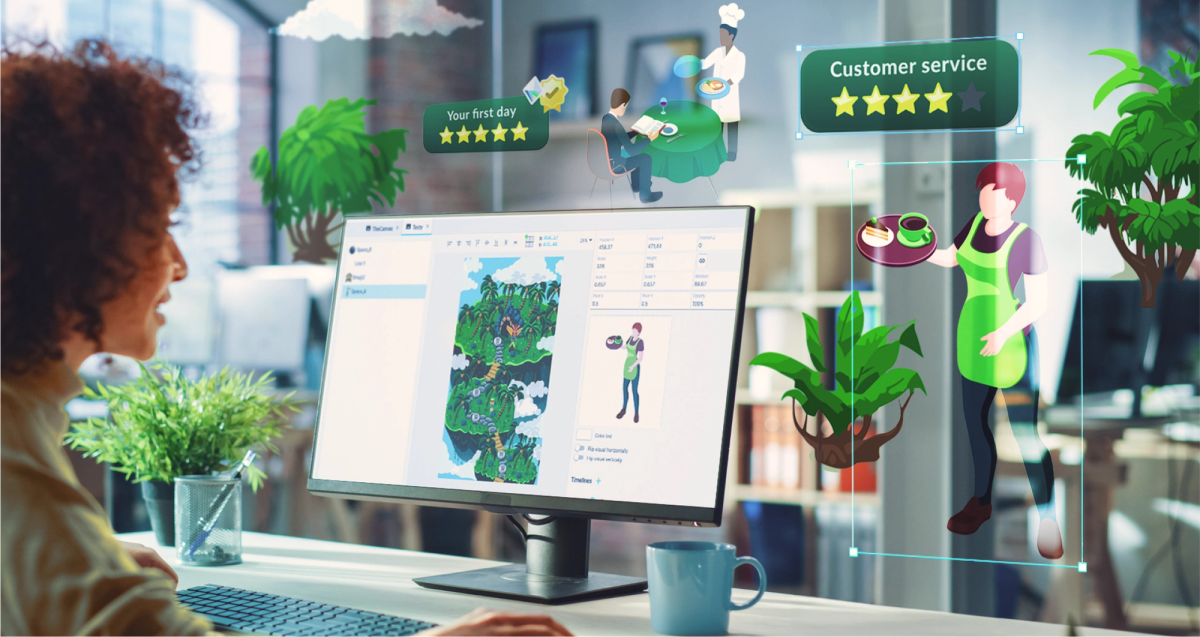
The Attensi Creator platform lets users create training content — simulations, games, voice-overs and translations — without coding or technical expertise.
AI agents with RealTalk
RealTalk lets users practice conversations with generative AI-powered virtual humans, navigating guided role-play before a more challenging free-form mode, with live feedback and benchmark scoring.
AI analytics
Attensi's AI analytics tools analyze quantitative and qualitative data quickly, providing insights that inform decisions on future training and measure effectiveness.
Personalized learning journeys
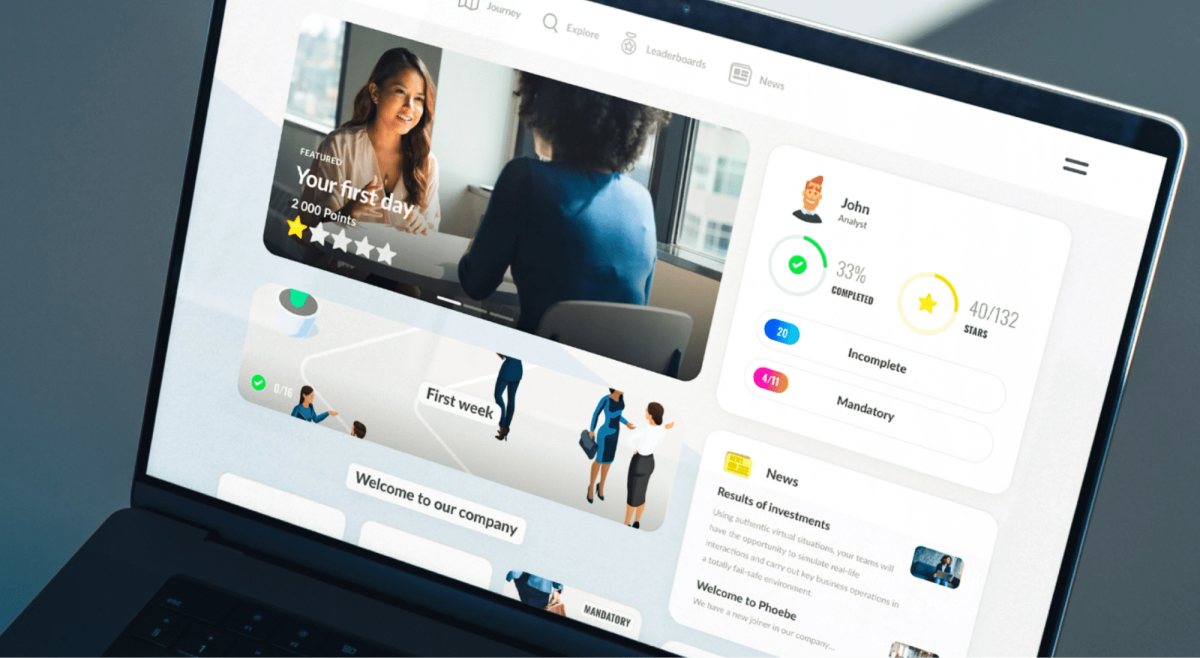
Engage can replace traditional LMS by offering personalized learning journeys tailored to individual needs, ensuring employees receive the most relevant training.