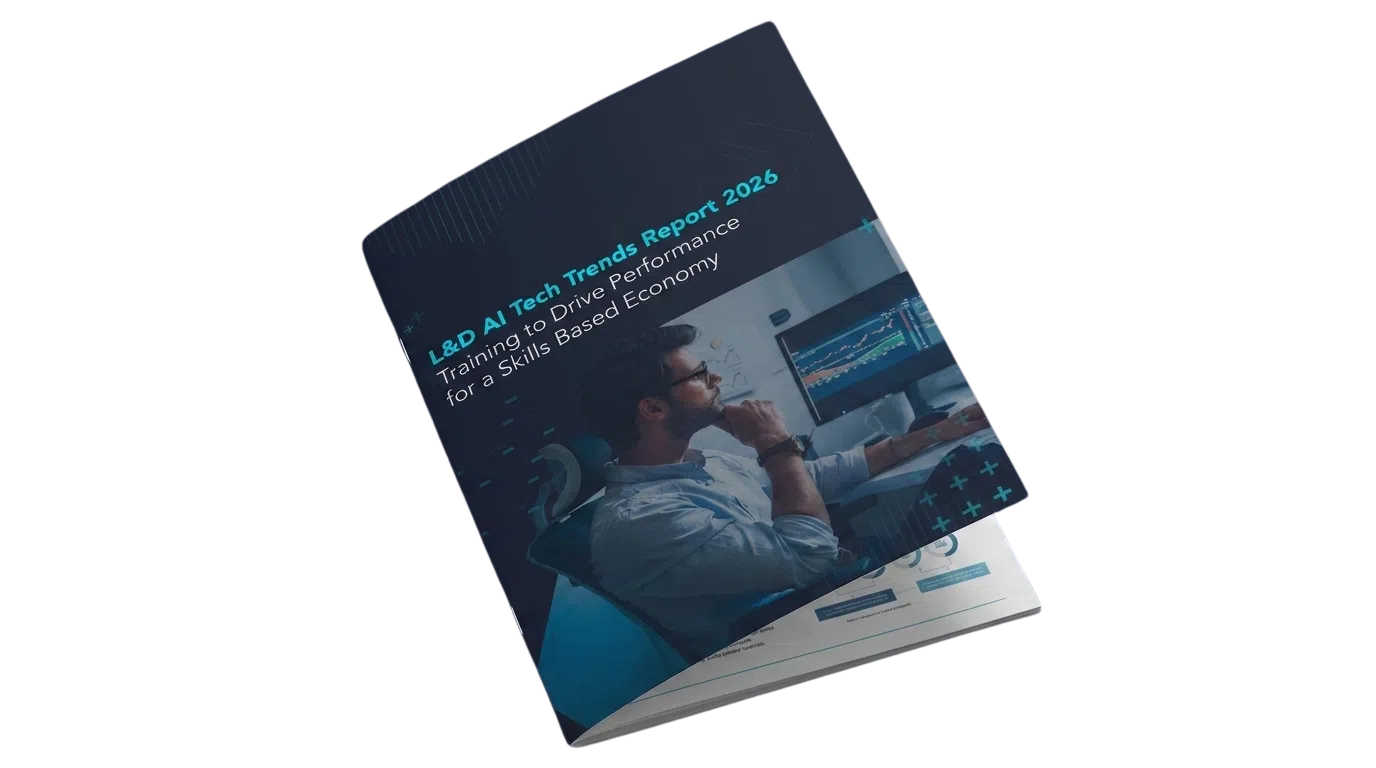
L&D AI Tech Trends Report 2026: Training to Drive Performance for a Skills Based Economy

Team Attensi
Published · Updated
 82%say onboarding needs improvement58%admit to skills masking – hiding gaps to avoid judgement
 67%would use AI for private skills practice49%of L&D leaders see a skills crisis, stating their executives are concerned that employees do not have the right skills
What's inside this report
Six key trends shaping 2026
Immersive onboarding
Building skills and confidence fast — reducing churn, cutting time to competence and improving performance.
AI content creation on demand
Fueling the learning journey efficiently and bridging skills gaps at pace in an era of unprecedented change.
AI coaches & trainers
Conversational AI coaches and the rise of AI Context Engineering.
AI-powered analytics
The transformational power of proving impact and ROI.
Personalized learning journeys
Accelerating skills, future-proofing the workforce, and the rise of Skills Mapping.
Gamification & the Attensi Method
Games as the ultimate engagement engine.
Immersive onboarding
From skills masking to skills mastery
Case studies:
- Circle K engaged 14,000 employees with game-based onboarding training, improving merchandise sales and basket size while reducing churn.
- YMCA Dallas reduced employee turnover by 58% through gamified onboarding simulations.
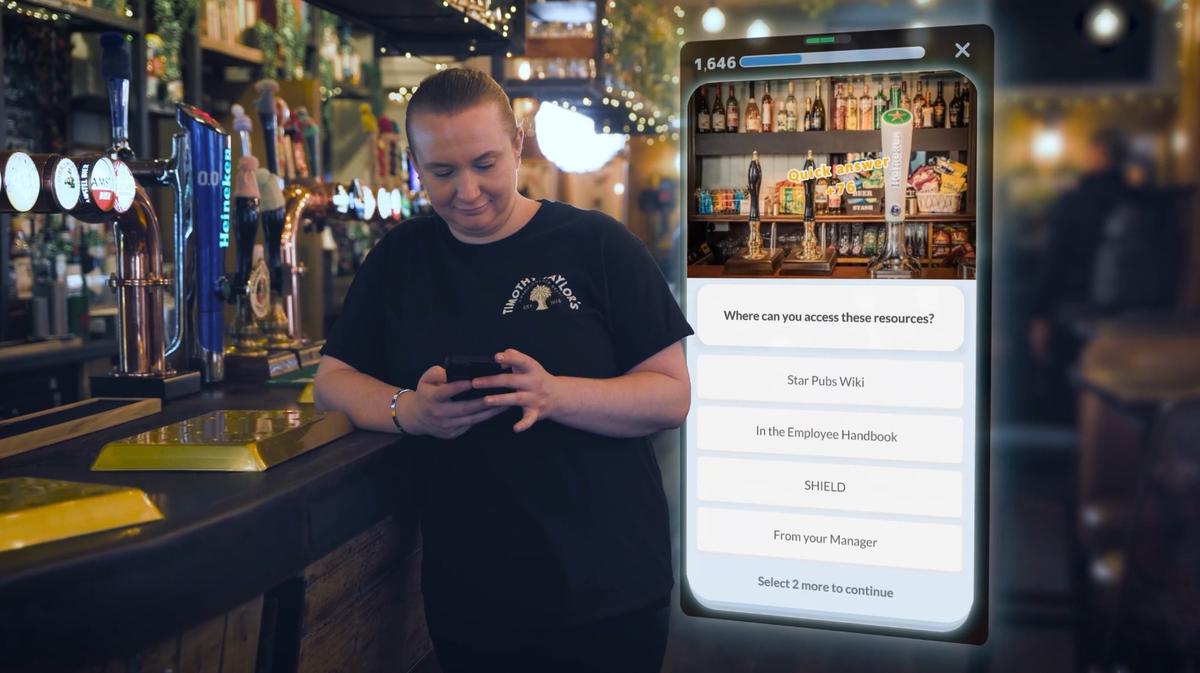
- Star Pubs (Heineken Group) saw an 83% improvement in time to competence for compliance training, while increasing pass rates in unannounced testing visits by 36%.
"Attensi provides that safe practice area where they can try out different processes over and over again until they get it right. They don't have to worry about making mistakes in a live system."
Emmalene French
L&D Facilitator, Equiniti (EQ)

AI content creation on demand
Bridging skills gaps at pace
The current skills gap means L&D professionals have a huge training content gap to fill — efficiently. Nearly half of learning and talent development professionals (49%) see a skills crisis, agreeing their executives are concerned employees don't have the right skills to execute the business strategy (LinkedIn Workplace Report 2025).
In-house content creation tools have become increasingly efficient and user-friendly with the rise of AI co-pilots, agents and assistants — organizations are increasingly adopting AI-powered tools for on-demand, self-service content creation.
"With Attensi AI – things that we didn't think were possible before – they are possible now. It has opened new borders."
Alba Trujillo Mora
International Training Manager, itsu

AI-powered analytics
Proving impact and ROI
AI adoption is a core 2026 trend, but so is AI tool overwhelm. Not all AI tools are created equal, and L&D teams are tasked with testing claims against performance more than ever. 49% of organizations say the biggest barrier to AI adoption is estimating and demonstrating business value (Gartner), and McKinsey's State of AI 2025 report found two-thirds of organizations have not yet begun scaling AI across the enterprise. In Attensi's 2025 survey of 2,000 employees in the US and UK, 71% agreed that better analysis of training impact would enable them to secure more funding for L&D resources.
"Tracking competency rather than just attendance was a game-changer. For the first time, we could see not just who had completed training, but who actually understood it and could apply it. That insight allowed us to close gaps and ensure no one was left behind."
Jacqui Cooper
Chief Nursing Information Officer, NHS

Personalized learning journeys
The rise of skills mapping
Personalized learning builds skills that drive real behavior change by meeting individual learning needs, providing career development pathways, being measurable with tangible feedback, and staying deeply engaging. Transformative training doesn't just reduce churn and improve performance — it attracts, retains and develops top talent.
"Personalized training saved us so much time. We didn't have to deliver the same content three different ways to suit different learning styles – the training itself adapted to individual needs. It was more engaging and much more effective."
Naomi Fraser
Information Governance Manager, Clatterbridge Cancer Centre

AI coaches & trainers
The rise of AI context engineering
Conversational AI is redefining coaching — giving employees a safe, hyper-realistic space to build skills and master difficult conversations through practice. The critical thing for L&D professionals to assess in 2026 is a supplier's ability to provide first-class AI context engineering, so the experience is hyper-relevant and gives learners genuine "on the job" experience.

Gamification & the Attensi Method
Games as the ultimate engagement engine

"I was dead against it [game-based training], but when I understood it and played it, it was fun, engaging, easy to use, and I saw the benefits quite quickly. It was a game changer."
Kevin Robinson
Operational Compliance Manager, Star Pubs (Heineken Group)
"The feedback from the staff has been really positive. They love the skills games, they love the points. You see them getting competitive and wanting to get the good scores. It's a more memorable, fun way of doing it."
Tracy Bickerdike
Star Pubs (Heineken Group)
Conclusion
In 2026, L&D leaders face both unprecedented challenges and transformative opportunities. The tech trends outlined in this report — immersive onboarding, AI-driven personalization, gamification, AI coaches, AI content creation and advanced analytics — are not optional; they are essential for thriving in a skills-based economy.
Organizations that embrace these innovations can reduce churn, accelerate time-to-competence, and attract, nurture and retain top talent.
The real test for L&D teams is to discern quality over quantity in AI L&D tools and to evidence ROI — that's how L&D professionals can drive revenue growth and secure more investment in training that delivers for 2026 and beyond.